Musician Gaelynn Lea, on the glittery wheelchair accessory that turned daily life into a fairytale.
In 2019, I was invited to speak at an arts-centred retreat called Life is a Verb Camp in North Carolina. My speech happened to fall on Halloween, and the camp organiser had set out some costume pieces and told people they could wear them.
I approached the table, and there they were: a large green pair of shimmering butterfly wings with two little arm straps. I fell in love instantly and asked my husband, Paul, if he could hang them on the back of my wheelchair. They slipped over the bars easily, and my chair was transformed into a fantastical thing of beauty. It’s like it had been waiting for the wings forever.
I wore them all weekend. Not only did they fill me with delight, but they brought cheer wherever they went. People would grin whenever I’d turn to reveal the wings behind me. For the first time in my life, I realised that my wheelchair was a visual expression of my internal aesthetic. My soul’s colour palette would have a lot of sparkles, rainbows, flowers and jewel tones.
Wheelchairs are tricky things. To the people who use them daily, they are a trusty companion. They not only give you mobility (an obvious plus) but also provide a place to hang your purse, let you sit comfortably in a chairless room and are great at splashing through puddles. Your wheelchair is your friend – a major ally.Paradoxically, it’s also not that big a deal. I don’t think about my wheelchair constantly, in the same way (if you can walk) that you likely don’t ponder the existence of your legs. They are just there, part of you.
But that’s not how the much of the world sees it. Disability still holds many negative connotations in our society. For most people, if they needed a wheelchair to get around, it would be a Very Bad Thing. So people feel awkward around wheelchairs. Instead of saying something typical, like “Hello”, strangers often say things like, “Do you have a licence to drive that thing?” For context, imagine if someone commented on how strong your thighs looked or asked if you had permission to be walking right now.
That said, I am generally pretty tolerant of people’s well-meaning but misguided remarks, because I know they are just trying to connect over something they don’t understand (and maybe think is just a wee bit tragic).
But suddenly, when I was wearing the wings, they forgot that my wheelchair was supposed to be sad! They smiled in spite of themselves. “I love your wings!” strangers would call from across the lawn at camp. They finally saw my wheelchair as fun and worthy of delight, which is how I had seen it for years.
I wore those wings all weekend at Life is a Verb Camp, and then I accidentally wore them home. When I realised I’d stolen them, I called the camp organiser in a panic, and she just said, “I think you were meant to have them.” I believe she was right, but also North Carolina is far from Minnesota and they would have been difficult to mail.
I started wearing the wings at shows. At first I was a little self-conscious, but I did really love them and I wanted to make a statement. Disability can be a bonus, a fun tool for self-expression. Decorating my chair felt like a piece of the Disability Culture puzzle. And the disabled people at my shows were thrilled when they saw the wings. We bonded over them.
When the pandemic hit, I started wearing my wings full-time. For one thing, they took up a lot of room on our coat rack in our studio apartment, so it was a little easier to have them hanging on my wheelchair. But they also reminded me that, even though I felt trapped and isolated, I was still a vibrant, creative person.
The wings helped me cope, and they were a great conversation starter at our apartment complex. Just last month our across-the-hall neighbour brought over a pair of ladybug wings for my chair. “I saw them at the op shop and I thought of you,” she said. They are my current wings of choice.
Now, I am not saying every disabled person should put wings on their wheelchair. It’s a rather flashy fashion choice, I’ll admit. But what if we saw our chairs, canes or walkers as an extension of our wardrobe? Not only would that change how they are seen by others, but it could bring us delight as well.
So, the next time you see a wheelchair, remember that it is a glorious tool for freedom… Imagine a pair of wings on it – and fly.
Gaelynn Lea is a disability advocate and violinist who won NPR Music’s Tiny Desk Contest in 2016, and composed the music for Macbeth on Broadway in 2022. Her memoir It Wasn’t Meant to Be Perfect will be available through Hachette Australia on 16 June.
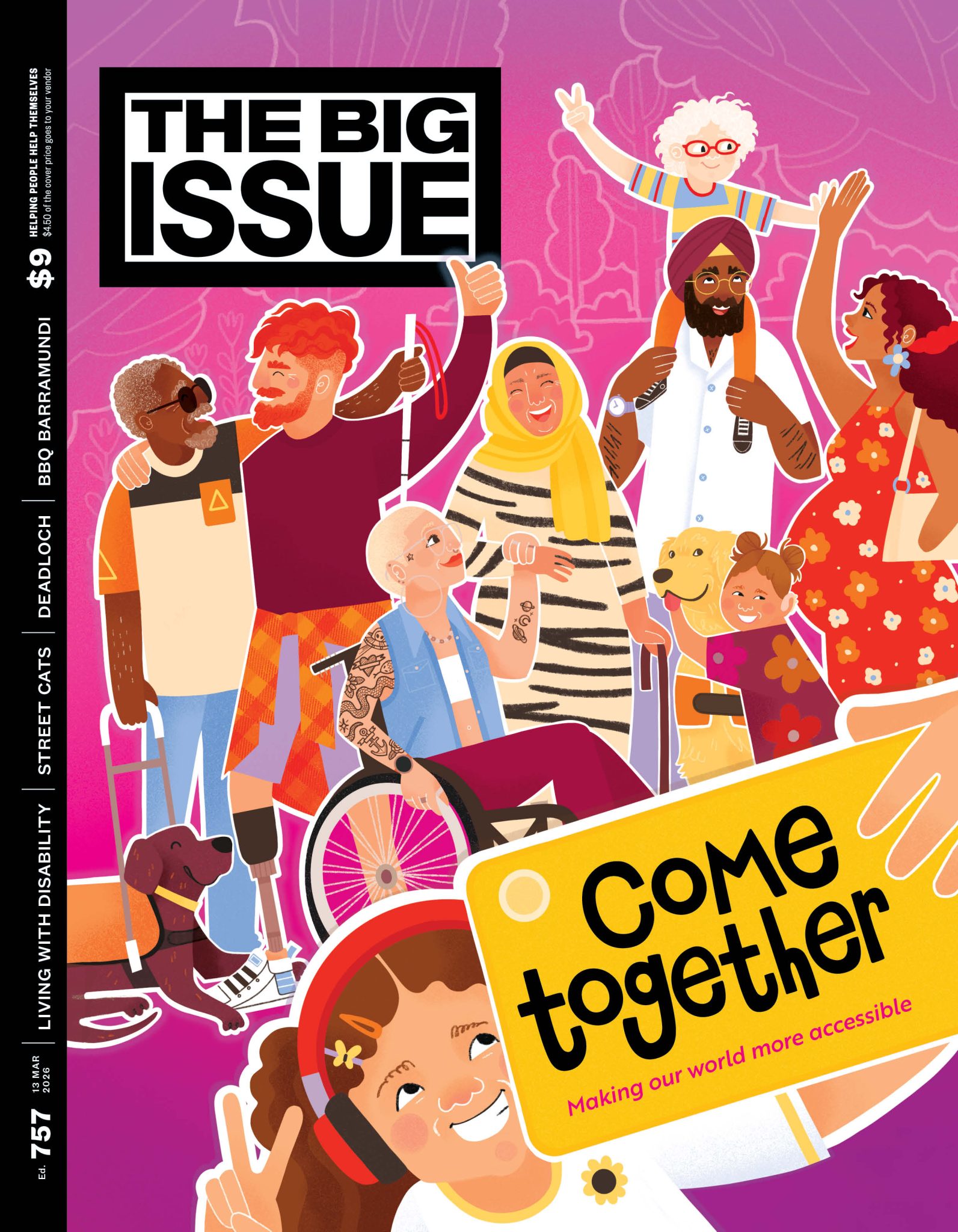
Published in ed#757
Want more of The Big Issue?
Subscribe to The Big Issue magazine to enjoy powerful journalism, stories from our vendors, and more — all delivered straight to your door.
Subscribe now.